Textile Printing Works
Short summary

approx. 1900

industrial brick architecture

ul. Karola Dittricha 18, 96-300 Żyrardów

printing department of the Linen Factory, used for decorating textiles

Philippe de Girard Linen Museum in Żyrardów, antique shop

open to visitors during museum opening hours

The building description was prepared in consultation with the staff of the Museum of Western Mazovia in Żyrardów.
Discover the history
The former Printing Works formed part of the Bielnik (bleach works) complex, the section of the Żyrardów factory responsible for finishing textiles, including bleaching, dyeing and decorating them. The surviving printing works building dates from the turn of the 20th century and is an example of brick industrial architecture.
Patterns were printed onto fabrics, tablecloths and napkins using specialised equipment and printing stencils. This tradition is reflected in the current “Woven Screens” exhibition, which presents large-format screen-printing stencils once used to decorate textiles.
The Linen Industry Works entered liquidation in 1991 and ceased operations on 30 April 1999. In 2014, the Museum of Linen, named after Philippe de Girard, was established in the halls of the former Printing Works. Today, the museum displays machinery and equipment connected with flax processing, textile production and the printing of textile products.
Architecture
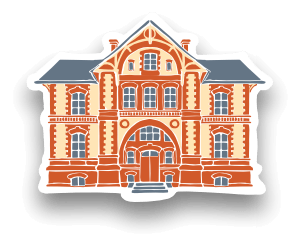
The former Printing Works building was constructed of red brick on an elongated rectangular plan. It has a compact industrial form and regularly spaced window openings that provided good natural light to the interiors. The façades are divided by brick lesenes and cornices, while the windows are framed with simple moulded surrounds. The internal structure was designed around the building’s production function and allowed printing equipment to be arranged freely.
The building was connected to neighbouring structures, forming a functional part of the finishing works complex.
The modern conversion has preserved the industrial character of the interiors, which now provide a setting for original machinery and equipment from the Linen Works.